
Environment
Gulf Stream Shift During Younger Dryas Shows Climate Change Risks

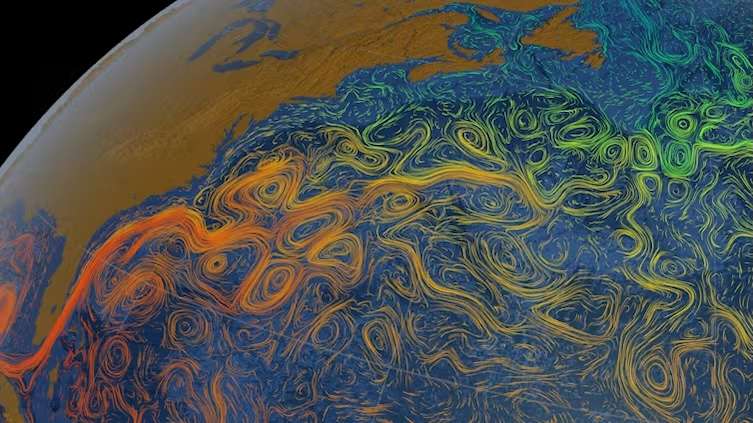
Gulf Stream Shifted North During Younger Dryas, Warns of Future Climate Risks
Estimated Reading Time: 3 minutes
Key Takeaways:
- The Gulf Stream shifted northward during the Younger Dryas period, nearly 13,000 years ago.
- Warmer Atlantic waters were found around Canada despite cooling in Greenland and the North Atlantic.
- This shift was linked to increased freshwater input from glacial melt.
- The research emphasizes the need for monitoring current climate trends to understand future impacts on Atlantic currents.
Context / Background
The Younger Dryas was a sudden cold snap that occurred approximately 12,900 to 12,800 years ago, lasting between 1,000 to 1,200 years. This period interrupted the overall warming trend following the last ice age, causing rapid cooling in Greenland and much of the North Atlantic. Research indicates that this event was closely linked to increased freshwater input, likely from glacial melt, which reduced salinity and disrupted the Atlantic Meridional Overturning Circulation (AMOC).
Key Details
The study analyzed seabed sediments off the continental slope of Nova Scotia, Canada, revealing the first direct evidence of a northward migration of the Gulf Stream during the Younger Dryas. Analysis of microfossils and geochemical tracers indicated that waters off Atlantic Canada warmed by approximately 4–5°C, despite surrounding areas cooling. This warming event is attributed to the Gulf Stream’s core path shifting northward, bringing warm subtropical water closer to the Canadian coast.
This evidence supports the hypothesis that major Atlantic currents can rapidly reorganize in response to abrupt climate changes. Researchers emphasize that this finding serves as a real-world analogue for understanding how current climate trends might influence Gulf Stream behavior in the future.
Impact
The shift in the Gulf Stream highlighted by this research has significant implications for both regional and global climate dynamics. A northward shift could lead to varying temperature patterns across the North Atlantic region, where some areas may experience warming while others cool down. The ramifications of such changes could affect weather patterns, precipitation, and ecosystems across Europe and North America.
In India, the increasing unpredictability of the monsoon and changing weather patterns could have downstream effects, given the interconnected nature of global climate systems. Changes in ocean currents like the Gulf Stream could potentially exacerbate existing climate vulnerabilities in regions like South Asia, where agriculture and water availability are sensitive to shifts in weather patterns.
What’s Next
This research emphasizes the need for ongoing monitoring of the Gulf Stream and AMOC behavior. As climate models project potential weakening of the AMOC, understanding past events like the Younger Dryas can help improve future climate projections, ensuring preparedness for impending climate risks. Given that such rapid reorganizations of Atlantic circulation are possible, immediate action in climate policy and risk management becomes crucial for mitigating adverse effects on societies and ecosystems globally.
FAQ Section
What is the Younger Dryas?
The Younger Dryas was a period of rapid cooling that occurred around 12,900 to 12,800 years ago, interrupting the warming trend that followed the last ice age.
How did the Gulf Stream shift affect climate?
The northward shift of the Gulf Stream led to warmer waters around Canada, potentially altering regional weather patterns while parts of the North Atlantic cooled.
What are the implications of this research?
The findings underscore the importance of monitoring oceanic currents in the face of climate change and suggest that similar shifts may occur in the future, impacting global climates.
Environment
Gulf Stream Shift During Younger Dryas Raises Climate Alarm
Gulf Stream Shift During Younger Dryas Raises Climate Alarm
Gulf Stream’s Northward Shift During Younger Dryas Raises Climate Change Alarm
- New evidence shows the Gulf Stream shifted significantly northward during the Younger Dryas cold snap.
- Atlantic Canada experienced warming of 4–5°C due to this shift, contrasting with severe cooling in Greenland.
- The research reinforces concerns about potential rapid changes in the Atlantic Meridional Overturning Circulation (AMOC) amid current climate challenges.
- Ongoing human-induced warming increases the likelihood of similar shifts happening in the near future.
- Understanding past climate events is crucial for future climate modeling and policymaking.
Context / Background
Key Details
Impact
What’s Next
FAQ Section
A: The shift was likely driven by pulses of freshwater entering the North Atlantic, obstructing deep water formation and influencing the AMOC.
A: A weakening AMOC could lead to significant shifts in the Gulf Stream, affecting weather patterns and climate stability across the North Atlantic.
A: Historical data from the Younger Dryas indicates that significant reorganizations can occur within decades to a century.
A: Future shifts could disrupt regional climates, with potential severe impacts on agriculture, fisheries, and overall climate resilience.



-

 Entertainment1 year ago
Squid Game Season 3 Trailer Teases a Brutal Finale: Gi-hun Returns for One Last Game
-
 Science12 months ago
Aryabhata: India’s First Satellite That Sparked a Space Revolution
-

 AI/ML8 months ago
Adobe unveils Firefly Foundry to build IP-safe generative AI models for studios
-

 Science1 year ago
Vera C. Rubin Observatory Unveils First-Ever 3,200-Megapixel Images
-

 Tech3 months ago
KPMG Withdraws AI Report Over Accuracy Issues
-
 Business1 year ago
Apple’s India Strategy Faces New Hurdles Amid Trump’s 25% iPhone Tariff Threat
-
 AI/ML1 year ago
Google I/O 2025: AI Takes Center Stage in a Future-Forward Showcase
-

 Science1 year ago
Axiom Mission 4 Blasts Off: India’s Shubhanshu Shukla Joins Historic Journey to ISS