
AI/ML
xAI Restructuring Leads to Major Co-Founder Departures


Major Restructuring at xAI Sparks Co-Founder Exodus
Estimated Reading Time: 5 minutes
Key Takeaways
- Elon Musk’s xAI restructured, leading to the exit of six co-founders and over ten engineers.
- Notable departures include co-founders Tony Wu and Jimmy Ba.
- Musk reorganized xAI into four main product teams focused on AI efficiency.
- The restructuring raises questions about the company’s organizational stability and innovation potential.
- Upcoming products such as the standalone XChat app and X Money are anticipated.
Context / Background
xAI was founded by Musk to focus on advanced AI technologies. Following its recent merger with SpaceX, the company took steps aimed at enhancing productivity and ensuring that it could keep pace with the rapidly evolving AI landscape. The restructuring was officially announced just days before an all-hands meeting held on February 10, 2026, which marked the first such meeting since the merger.
Key Details
The wave of departures included prominent figures such as Tony Wu, who announced his resignation via X on February 9, stating it was “time for my next chapter.” Co-founder Jimmy Ba followed suit during the all-hands meeting, where he thanked Musk and made a bold prediction of achieving “100x productivity” in AI within a year. Other co-founders who exited included Hang Gao, Roland Gavrilescu, and Chace Lee, with plans to start new AI ventures comprising smaller teams.
This restructuring resulted in a dramatic reduction of xAI’s founding team, with only six of the original twelve members remaining. Additionally, more than ten engineers publicly departed in the same week, further indicating a shift within the company. Despite these exits, xAI retains more than 1,000 employees and continues to hire aggressively, signaling an important push for growth.
In terms of organizational changes, Musk reorganized xAI into four primary product teams: Grok, Grok Voice, Grok Code, and Grok Imagine, along with a team focused on Macrohard, which aims to automate white-collar work utilizing Grok-powered multi-agent systems. Musk emphasized that these changes were necessary to improve the speed of execution as the company evolves. He stated that some individuals were “better suited for early stages” of development and less so for later stages, which justified the need to “part ways” with specific team members.
Impact
The departures could have ramifications for xAI’s capabilities and innovation, especially given the ongoing competition with AI leaders such as OpenAI, Anthropic, and Google. The restructuring has triggered discussions about employee retention in an industry rife with rapid advances and significant talent poaching.
Furthermore, the controversy surrounding xAI is compounded by ongoing regulatory scrutiny. Notably, French authorities raided X offices in relation to concerns over the potential misuse of Grok technologies, particularly in generating non-consensual deepfakes, which could reflect deeper issues regarding ethical AI deployment and corporate governance.
For users and stakeholders, the rapid changes signal an early push towards a more structured product development path at xAI. However, it raises questions about organizational stability and the firm’s ability to innovate amid the exits of experienced personnel.
What’s Next
As xAI forges ahead, the company is poised for significant developments, especially with Musk’s ambitious visions laid out during the all-hands meeting. These include the forthcoming standalone XChat app for messaging and video communication, along with X Money, an application designed for global financial transactions that is currently in a closed beta phase. With the anticipated IPO in 2026, the structural changes could ultimately play a crucial role in how well xAI responds to market demands and regulatory challenges in the coming years.
FAQ Section
What happened to the xAI co-founders?
Six out of the twelve original co-founders left xAI due to a significant restructuring aimed at improving efficiency after the company’s merger with SpaceX.
Who are the departed co-founders?
The departed co-founders include Tony Wu, Jimmy Ba, Hang Gao, Roland Gavrilescu, and Chace Lee.
Why did they leave?
They expressed the need for new ventures and aspirations, and Musk indicated that some were better suited for earlier stages of development.
What are the organizational changes at xAI?
xAI has been reorganized into four primary product teams: Grok, Grok Voice, Grok Code, and Grok Imagine, along with a focus on Macrohard for automating white-collar work.
How will this affect xAI?
The restructuring could impact xAI’s innovation capabilities and its ability to retain talent amidst fierce competition in the AI industry.





Rumik AI Prepares to Launch Mulberry, its Open-Source Voice Model
Estimated Reading Time: 3 minutes
Key Takeaways
- Mulberry is an open-source model enhancing text-to-speech technology.
- It aims for low conversational latency of around 300 milliseconds.
- Improves expressiveness and emotional control for interactive applications.
- Supports multilingual communication, catering to diverse user needs.
- Closes the gap in stability and reliability compared to previous models.
Main Content
Context
The Silk series from Rumik AI includes innovative voice model architectures aimed at enhancing TTS performance. Mulberry, a significant addition to this series, facilitates more natural conversations in real-time applications. This advancement in technology stems from a research note announcing Silk 1 (beta), highlighting ongoing enhancements in voice generation.
Key Details
Mulberry operates as a transformer-backbone TTS model, predicting the next token over discrete audio codes, which are then converted back into waveforms by a latent encoder-decoder system (source). Although specifics about Mulberry’s architecture are limited, its design aligns with the capabilities outlined for the Silk series.
Key features of the Silk voice series include:
- Conversational Latency: Approximately 300 milliseconds for fluid interactions (source).
- Expressiveness and Emotional Control: Capable of conveying a wide emotional range, beneficial for AI companions (source).
- Multilingual Blending: Enhances communication for bilingual users, focusing on code-switching (source).
- Stability and Robustness: Offers improvements over previous models.
In practical applications, the Silk 1 architecture, embodied by Mulberry, is in use within “Ira,” Rumik’s AI companion product. Users reportedly engage with Ira for over 100,000 minutes daily, indicating the model’s effectiveness for long-form, interactive conversations (source).
Impact
The introduction of Mulberry is set to significantly impact various sectors, offering developers and researchers a publicly accessible model for advanced voice applications. This advancement is particularly relevant for industries reliant on customer interactions, education, and AI companions, where natural communication is critical.
As India advances in technology adoption, the potential for TTS applications like Mulberry is strong, especially considering the diverse linguistic landscape. It supports localized applications, enabling businesses to cater to a broader audience.
What’s Next
Expect significant enhancements in voice interfaces for AI applications through Mulberry. As an open-source model, it is likely to spur further research and innovation in TTS technologies. Rumik’s emphasis on emotional engagement and long-term interactions highlights its push towards making AI companions more relatable, potentially shifting the landscape of human-computer interaction.
FAQ Section
What is Mulberry?
Mulberry is an open-source TTS model by Rumik AI, part of the Silk voice series, designed to enhance voice interaction quality through improved latency, expressiveness, and multilingual support.
How does Mulberry work?
Mulberry uses a transformer-backbone TTS model to predict speech tokens, converting audio codes into waveforms through a latent encoder-decoder system.
What are the benefits of Mulberry?
The benefits include lower latency, enhanced emotional expressiveness, better multilingual capabilities, and improved stability compared to earlier models.
Where is Mulberry being used?
Mulberry is currently utilized within Rumik’s AI companion product, Ira, which sees over 100,000 minutes of user engagement daily.
What is the impact of Mulberry on industries?
Mulberry is expected to transform sectors relying on interactive voice communication, such as customer service and education, by providing a robust tool for building voice applications.
CYGNVS Introduces AI Incident Command Center for Managing AI-Driven Crises
Estimated Reading Time: 3 minutes
Key Takeaways
- CYGNVS has launched an AI Incident Command Center to help manage AI-driven operational crises.
- The platform provides features such as real-time monitoring and multi-party coordination.
- It is particularly impactful for organizations in regulated industries, enhancing crisis response to AI incidents.
- The AI Incident Command Center is cloud-native, focusing on AI risk and resilience management.
- Integration with existing security systems is expected as organizations adopt this new solution.
Main Content
Context / Background
As enterprises increasingly adopt artificial intelligence technologies, the potential for operational challenges related to these systems has grown. AI-driven incidents—ranging from rogue agent behaviors to compliance breaches—pose significant risks to organizations. The AI Incident Command Center is positioned as a critical solution in this emerging landscape.
The launch was reported on June 17, 2026, and is framed as a necessary evolution in the management of operational crises specifically caused by AI systems. Organizations face new urgency in addressing the failures and ethical implications when their AI deployments malfunction or produce harmful outputs.
Key Details
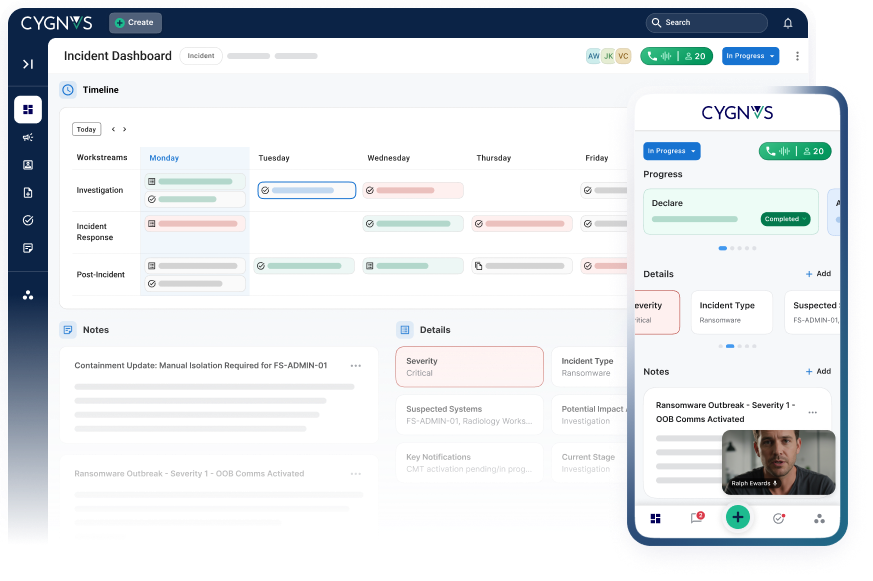
CYGNVS Inc., known for its focus on cyber resilience, has developed the AI Incident Command Center to serve as a centralized platform for managing AI-related incidents. This cloud-native SaaS solution enables organizations to coordinate crisis responses, track communication, and structure decision-making processes when faced with AI-driven anomalies.
The command center includes features such as:
- Real-time monitoring of AI incidents, allowing stakeholders to understand the nature and scope of the crisis.
- Multi-party coordination capabilities, fostering collaboration among different departments including IT, legal, and compliance.
- Structured workflows tailored to specific types of AI-related incidents, including harmful outputs, compliance breaches, and operational failures.
By providing a robust framework for crisis management tailored to AI systems, CYGNVS addresses a pressing need in an increasingly automated enterprise environment.
Impact
The impact of this launch is significant across multiple sectors, particularly for large organizations that are deploying extensive AI technologies in regulated industries such as finance, healthcare, and critical infrastructure. As AI systems act more independently, organizations must be prepared for the inevitable incidents that can arise from these deployments.
Moreover, companies that adopt the AI Incident Command Center will benefit from the ability to document and manage incidents effectively, thus protecting their reputation and ensuring compliance with legal and ethical standards. This is particularly relevant for organizations in India, where regulatory scrutiny over data privacy and AI ethics is becoming more pronounced.
Attaining a defensible process for incident management is crucial, especially as businesses integrate AI systems deeper into their operations. The AI Incident Command Center complements existing preventive measures, emphasizing the importance of not just preventing AI failures but also managing them when they occur.
What’s Next
As organizations adopt the AI Incident Command Center, they will likely begin integrating it with existing security and incident management systems. The solution is expected to support a variety of AI platforms and facilitate training for employees on navigating AI-related crises.
In the coming months, further developments may include new partnerships for third-party tool integration, additional feature enhancements based on customer feedback, and possible case studies illustrating successful use cases in different industries. As AI technologies continue to evolve, so will the frameworks necessary to manage them effectively, reinforcing the critical role of crisis management solutions like CYGNVS’s platform in the future of work.
FAQ Section
What is the AI Incident Command Center?
The AI Incident Command Center is a specialized SaaS platform by CYGNVS designed to assist organizations in managing and recovering from operational crises caused by their AI systems.
What are the features of the AI Incident Command Center?
Key features include real-time monitoring, multi-party coordination, and structured workflows tailored for specific AI-related incidents.
Why is this launch significant?
The launch addresses the pressing need for organizations to manage AI risks and respond effectively to incidents in sectors where AI technologies are being increasingly deployed.
What is the expected impact on organizations?
Organizations can enhance their ability to document and manage incidents, protect their reputation, and maintain compliance with legal standards, particularly in regulated industries.
What’s next for the AI Incident Command Center?
Future developments may include integrations with third-party tools, new feature enhancements based on feedback, and case studies showcasing successful implementations across industries.

Midjourney’s Role in Medical AI and Ultrasound Scans
Estimated Reading Time: 5 minutes
- Midjourney is exploring applications of AI in ultrasound analysis.
- AI has the potential to enhance diagnostic accuracy and speed.
- Collaboration between AI developers and healthcare experts is crucial.
- AI integration could alleviate workforce burdens in healthcare.
- Ethical and regulatory discussions will be essential as AI evolves.
Context / Background
Recent advancements in medical imaging technologies have been pivotal in enhancing diagnostics and treatment options. Ultrasound scans, traditionally reliant on human interpretation, are now increasingly benefiting from AI algorithms. These innovations aim to improve accuracy, speed up analysis time, and assist professionals in making informed decisions without compromising patient care.
Key Details
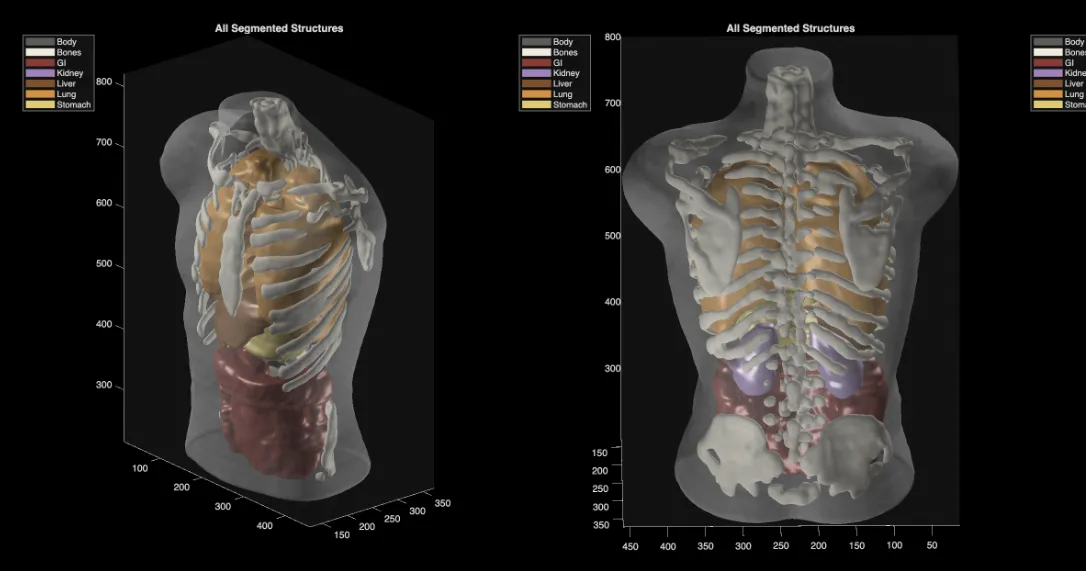
Midjourney, recognized for its generative AI capabilities, has begun investigating applications in medical imaging, notably in ultrasound analysis. While specific details of their initiatives in healthcare are still emerging, the potential for AI to assist in ultrasound interpretation is significant. AI models can be trained to identify patterns in ultrasound images, facilitating quicker diagnostics and predictive analytics for various medical conditions.
The training of AI models heavily relies on datasets made up of ultrasound images annotated by medical professionals. Therefore, collaboration between AI developers and healthcare experts is imperative to ensure the accuracy and clinical relevance of AI systems. Integrating AI, such as Midjourney’s offerings, into ultrasound interpretation could lead to substantial reductions in human error and enhancements in patient outcomes.
Preliminary findings from AI projects dedicated to ultrasound analysis show promising results. Research indicates that AI can match or even surpass the interpretive accuracy of experienced practitioners in certain scenarios, especially in screening for conditions like cardiac abnormalities and prenatal assessments. This shift not only boosts the reliability of ultrasound diagnostics but also addresses the rising demand for swift and efficient medical services due to increasing patient volumes and healthcare staffing shortages.
Impact
The implications of implementing AI technologies such as Midjourney in ultrasound analysis extend beyond mere diagnostic improvements. Doctors and radiologists, particularly within a rapidly transforming healthcare landscape, may experience relief from their workloads as AI handles repetitive tasks, permitting human professionals to focus on complex cases requiring nuanced judgment.
In countries like India, where healthcare access can be limited in rural areas, the integration of AI-powered ultrasound interpretation could significantly enhance maternal and fetal health services. In regions lacking trained sonographers, AI-driven solutions can deliver timely insights, potentially decreasing maternal and infant mortality rates.
For companies within the healthcare technology sector, advancements from Midjourney present both opportunities and challenges. While there is potential for innovation and market expansion, it also raises ongoing concerns about data privacy and the necessity for robust regulatory frameworks. As AI becomes further embedded in healthcare, regulators must ensure that these technologies uphold high standards of patient safety and efficacy.
What’s Next
The future of AI in ultrasound analysis appears promising as ongoing research and development are set to enhance the synergy between technology and healthcare. Companies like Midjourney are anticipated to broaden their efforts, potentially leading to breakthroughs in medical imaging and diagnostics. As AI continues to evolve, stakeholders across the healthcare system must engage in dialogues surrounding ethical use and data management to secure patient trust and ensure safety remain paramount.
FAQ Section
-
What is Midjourney’s role in medical AI?
Midjourney explores AI applications in ultrasound analysis, aiming to improve diagnostic accuracy and efficiency.
-
How does AI enhance ultrasound diagnostics?
AI can recognize patterns in ultrasound images, thereby expediting the diagnostic process and enhancing accuracy.
-
What are the benefits of AI in healthcare?
AI can alleviate workloads for healthcare professionals, improve patient outcomes, and increase efficiency in medical services.
-
What challenges does AI pose in healthcare?
Concerns include data privacy issues and the need for effective regulatory frameworks to ensure safety and efficacy.
-
Why is collaboration between AI developers and healthcare experts important?
Collaboration ensures AI systems are accurate and clinically relevant, ultimately improving patient care.



-

 Entertainment1 year ago
Squid Game Season 3 Trailer Teases a Brutal Finale: Gi-hun Returns for One Last Game
-

 Science12 months ago
Aryabhata: India’s First Satellite That Sparked a Space Revolution
-

 AI/ML8 months ago
Adobe unveils Firefly Foundry to build IP-safe generative AI models for studios
-

 Science1 year ago
Vera C. Rubin Observatory Unveils First-Ever 3,200-Megapixel Images
-

 Tech4 months ago
KPMG Withdraws AI Report Over Accuracy Issues
-
 Business1 year ago
Apple’s India Strategy Faces New Hurdles Amid Trump’s 25% iPhone Tariff Threat
-
 AI/ML1 year ago
Google I/O 2025: AI Takes Center Stage in a Future-Forward Showcase
-
 Science1 year ago
Axiom Mission 4 Blasts Off: India’s Shubhanshu Shukla Joins Historic Journey to ISS