Uncategorized
Understanding Playwright and Selenium for Web Automation

Playwright vs Selenium: An In-Depth Comparison of Web Automation Tools
Estimated Reading Time: 6 minutes
Key Takeaways
- Playwright offers faster operations and better support for modern web applications.
- Selenium boasts broader browser compatibility and a more extensive programming language support.
- Both tools are evolving, but Playwright is experiencing rapid adoption growth.
- The choice between them impacts testing efficiency and legacy system compatibility.
Context / Background
Playwright, launched in 2019 and backed by Microsoft, emphasizes speed and modern web automation approaches. Conversely, Selenium has been around since 2004, providing a mature ecosystem with extensive browser and programming language support. Understanding the evolution and features of both tools is crucial for users and companies considering their testing frameworks.
Key Details
Performance and Architecture
Playwright employs a WebSocket connection and the Chrome DevTools Protocol, allowing rapid, reliable interactions with a persistent connection. This results in lower overhead, enabling asynchronous operations and supporting parallel execution through multiple browser contexts. Thus, Playwright is often regarded as faster and more efficient for testing large applications source.
In contrast, Selenium uses the WebDriver API and the HTTP/JSON Wire Protocol, which can introduce latency and necessitate manual setups, such as Selenium Grid for parallel testing. This structure often leads to slower execution and less stability compared to Playwright source.
Browser and Language Support
Playwright natively supports Chromium, Firefox, and WebKit but does not cater to Internet Explorer or legacy browsers. Conversely, Selenium supports a wider range, encompassing Chrome, Firefox, Safari, Edge, Opera, and Internet Explorer via external drivers source.
For language support, Playwright enables test writing in JavaScript, TypeScript, Python, Java, and .NET C#. Selenium, however, accommodates a broader array of languages, including Java, Python, C#, Ruby, Perl, PHP, and JavaScript, appealing to projects requiring versatile language options source.
Features and Tools
Although both tools offer modern capabilities, Playwright presents advanced features such as device emulation, network interception, and auto-waiting, making it well-suited for contemporary applications, especially those employing Single Page Applications (SPAs) and responsive designs. Selenium’s feature set is more limited, often requiring additional plugins or workarounds to achieve similar results source.
Adoption and Market Share
By 2025, Playwright is predicted to capture around 15% of market share with a 235% year-over-year growth. Selenium, meanwhile, maintains a stable user base, holding about 39% of the market and serving over 15 million developers source.
Impact
The decision between Playwright and Selenium influences various stakeholders, including developers, testers, and organizations. Developers looking for enhanced productivity and quick feedback might favor Playwright, especially in modern workflows involving mobile emulation and performance-critical testing. On the other hand, enterprises relying heavily on legacy systems may prefer Selenium due to its extensive language compatibility source.
In India, both tools are gaining popularity as testing becomes increasingly vital for software quality assurance. The burgeoning tech ecosystem in the country is driving demand for faster and more effective testing solutions, fostering the growth of both Playwright and Selenium among local startups and enterprises.
What’s Next
As the domain of web automation evolves, Playwright continues to innovate with features like the Model Context Protocol (MCP), designed for AI-driven testing using DOM snapshots. Meanwhile, Selenium is making advancements such as WebDriver BiDi, enabling bidirectional control in testing scenarios. Organizations must evaluate their current infrastructure and future needs when selecting between these two robust tools. With a focus on speed and modernity in web applications, Playwright may increasingly be favored by developers seeking efficiency and agility in their testing processes.
FAQ Section
What is Playwright?
Playwright is an open-source automation framework developed by Microsoft that allows for web application testing across different browsers. It focuses on speed and automation capabilities, making it suitable for modern web applications.
What is Selenium?
Selenium is a long-established open-source framework for automating web browsers. It supports multiple programming languages and browser types, enabling extensive automation capabilities in software testing.
Which is faster, Playwright or Selenium?
Playwright is generally considered faster than Selenium due to its architecture, which allows for lower overhead and supports asynchronous operations and parallel execution effectively.
Which has more browser support, Playwright or Selenium?
While Playwright supports Chromium, Firefox, and WebKit, Selenium has broader browser compatibility, including support for legacy browsers like Internet Explorer.
Which one should I choose?
The choice between Playwright and Selenium depends on factors like project requirements, existing infrastructure, and the specific capabilities needed for automation. Playwright may be suited for modern applications, while Selenium is often preferred for legacy systems.

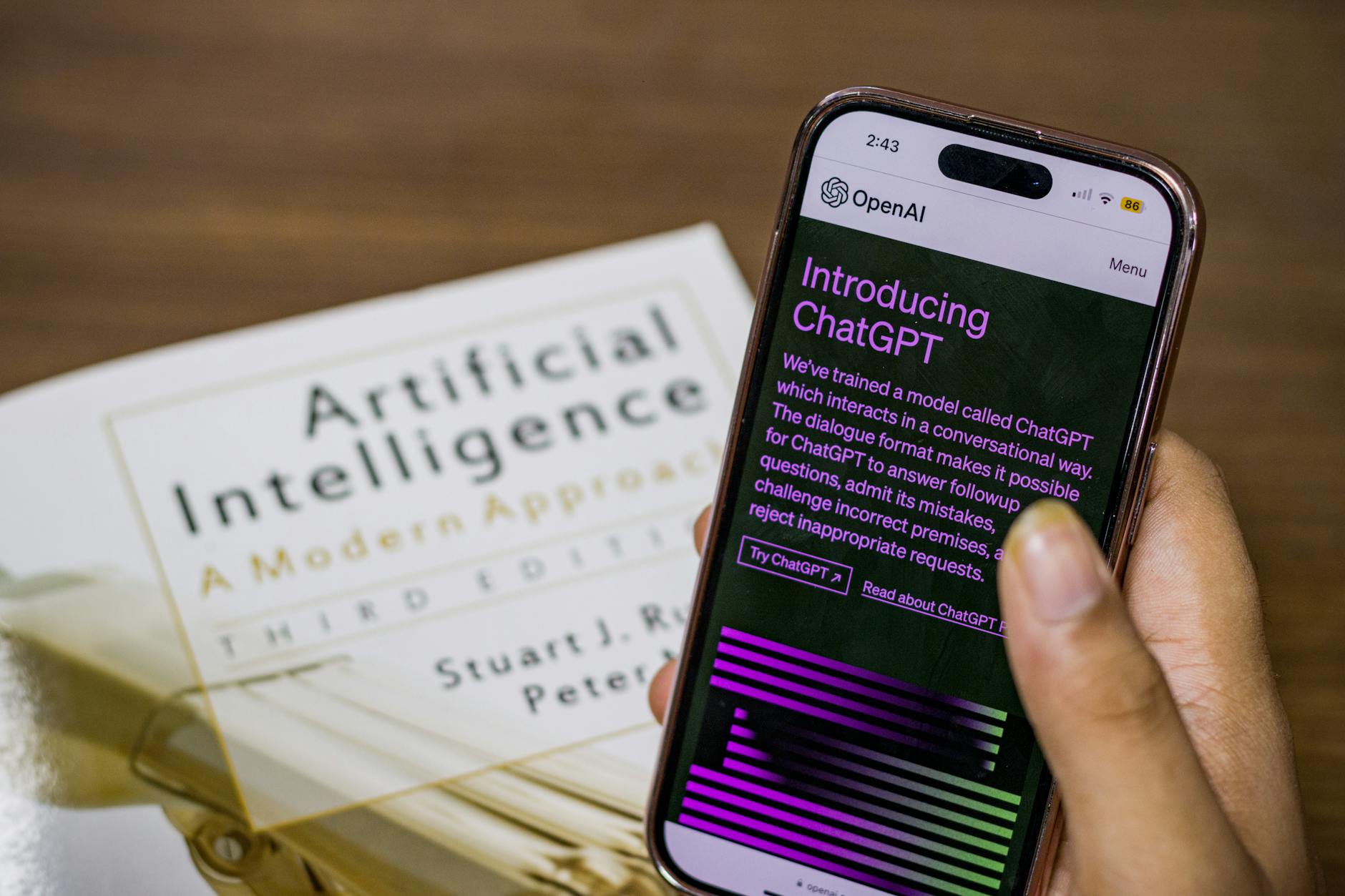
India to Push for Global AI Commons at AI Impact Summit in New Delhi
- India aims to establish a “global AI commons” at the AI Impact Summit on February 19-20, 2026.
- Focus on AI’s potential to drive social impact in health, education, and agriculture.
- Collaboration among nations to share resources and technologies rather than just purchasing them is emphasized.
- 12 projects are currently funded to enhance India’s AI capabilities.
- The summit will guide discussions around global collaboration in AI technologies.
Main Content
Context / Background
Key Details
Impact
What’s Next
FAQ Section
What is the AI Impact Summit?
When will the AI Impact Summit take place?
What is the goal of establishing a “global AI commons”?
What role does India aim to play in AI advancements?

Artificial Intelligence, commonly known as AI, is one of the most influential ideas shaping the modern world. From smartphones and search engines to healthcare and finance, AI quietly powers systems that learn, adapt, and assist humans at scale.
But what exactly is artificial intelligence, and how does it actually work behind the scenes?
This evergreen guide explains AI in simple, lasting terms, without hype or jargon.
What Is Artificial Intelligence?
Artificial Intelligence is the field of computer science focused on creating systems that can perform tasks typically associated with human intelligence.
These tasks include:
- Learning from experience
- Recognizing patterns
- Understanding language
- Making decisions
- Solving problems
Traditional software follows fixed rules written by humans. AI systems, in contrast, learn those rules from data.
Instead of telling a machine exactly how to recognize a face or detect spam, we show it examples and let it discover patterns on its own.
The Core Idea Behind AI
At its heart, AI is built on a simple principle:
A system can improve its performance by learning from data.
The more relevant and high-quality data an AI system processes, the better it becomes at its task. This shift from rule-based programming to data-driven learning is what makes AI fundamentally different from earlier software.
Types of Artificial Intelligence
Artificial intelligence can be grouped based on capability.
1. Narrow AI
This is the only form of AI in practical use today.
Narrow AI is designed to perform a specific task extremely well, such as:
- Recommending videos or products
- Translating languages
- Detecting fraud
- Recognizing images or speech
These systems cannot operate outside their defined domain.
2. General AI
General AI refers to a theoretical system that can learn, reason, and apply intelligence across multiple fields, similar to a human.
This type of AI does not exist yet.
3. Superintelligent AI
A speculative concept where AI surpasses human intelligence in all areas. This remains a subject of research and debate rather than reality.
How Does Artificial Intelligence Work?
AI systems are built using three essential ingredients: data, algorithms, and computing power.
1. Data
Data is the foundation of AI.
AI systems learn from examples such as:
- Text documents
- Images and videos
- Audio recordings
- Sensor data
Better data leads to better learning. Poor or biased data leads to flawed results.
2. Algorithms
Algorithms are mathematical methods that guide how an AI system learns from data.
One of the most common approaches is machine learning, where the system:
- Analyzes input data
- Makes predictions or classifications
- Measures how accurate those predictions are
- Adjusts itself to reduce errors
This loop repeats continuously during training.
3. Neural Networks and Deep Learning
Many modern AI systems rely on neural networks, which are inspired by the structure of the human brain.
Neural networks consist of layers of connected nodes that:
- Receive numerical inputs
- Process them through weighted connections
- Produce an output
When neural networks become large and complex, the approach is called deep learning. Deep learning enables AI to handle complex tasks like image recognition, speech understanding, and natural language processing.
4. Inference
Once training is complete, the AI system enters the inference phase.
This is when it applies what it has learned to new, unseen data. For example:
- Identifying a face it has never encountered
- Translating a new sentence
- Predicting future trends
A Simple Analogy
Imagine teaching a person to identify cars.
You show thousands of images labeled “car” and “not car.” Over time, the learner begins recognizing wheels, shapes, and patterns. Eventually, they can identify cars in completely new images.
AI learns in a similar way, but at far greater speed and scale.
Where Is AI Used Today?
Artificial intelligence is already embedded in everyday systems.
Common applications include:
- Search engines ranking results
- Navigation apps predicting traffic
- Email systems filtering spam
- Banks detecting suspicious transactions
- Healthcare tools assisting diagnosis
- Businesses automating customer support
Most AI works quietly in the background, enhancing efficiency rather than replacing people.
What Artificial Intelligence Cannot Do
Despite its capabilities, AI has clear limitations.
- It does not think or feel like humans
- It lacks awareness or intention
- It relies entirely on training data
- It can make confident mistakes
AI systems do not understand meaning in a human sense. They recognize patterns, not purpose.
Why Artificial Intelligence Matters
AI matters because it changes how intelligence scales.
Tasks that once required large teams or years of experience can now be assisted by systems that:
- Process massive amounts of information
- Detect patterns quickly
- Operate continuously
This makes AI a powerful tool in science, business, healthcare, and education. The real value lies not in replacing humans, but in augmenting human decision-making.
The Long-Term Perspective
Artificial Intelligence is not a single breakthrough. It is an ongoing shift in how software is built and how machines interact with information.
As data grows and systems improve, AI will continue to evolve as a foundational technology, much like electricity or the internet.
Understanding how AI works is no longer optional. It is becoming a core part of digital literacy in the modern world.
Final Thought
Artificial Intelligence is best understood not as a machine that thinks, but as a system that learns.
When used responsibly, AI becomes a powerful partner, helping humans see patterns, make better decisions, and focus on what truly requires human judgment.
The future of AI is not about machines replacing people. It is about people who understand AI replacing those who do not.


xAI Restructuring Leads to Major Co-Founder Departures

India Pursues Global AI Commons at Summit in New Delhi

Broadcom and TSMC Shape AI Semiconductor Industry
-

 Entertainment10 months ago
Squid Game Season 3 Trailer Teases a Brutal Finale: Gi-hun Returns for One Last Game
-
Fashion9 years ago
These ’90s fashion trends are making a comeback in 2017
-
Business9 years ago
The 9 worst mistakes you can ever make at work
-

 Science6 months ago
Aryabhata: India’s First Satellite That Sparked a Space Revolution
-

 AI/ML2 months ago
Adobe unveils Firefly Foundry to build IP-safe generative AI models for studios
-
Fashion9 years ago
According to Dior Couture, this taboo fashion accessory is back
-

 Science10 months ago
Vera C. Rubin Observatory Unveils First-Ever 3,200-Megapixel Images
-
Sports9 years ago
Phillies’ Aaron Altherr makes mind-boggling barehanded play